
Alligator Weed
Alternanthera philoxeroides

Alligator weed is a perennial aquatic plant that chokes waterways and also invades adjacent land, including crops and pasture.
Originally from Brazil, it arrived in NZ in the late 19th century in ballast water from visiting ships. It’s abundant in Northland, Auckland, and lower Waikato regions, with some other occurrences in greater Waikato and the Bay of Plenty. It has the potential to spread further south and is subject to regional environmental controls. The species is also listed as a controlled plant by the Ministry of Primary Industries.
It forms a dense floating mat that blocks waterways, chokes out other aquatic plants, and causes serious silting and flooding problems. Stock will eat the plant though it is toxic, causing photosensitivity and possibly blindness.
Alligator weed spreads to new sites through stem fragments transported within waterways and also carried inadvertently by machinery, recreational boats & trailers, and by fishing nets. The plant does not produce seeds in NZ; reproduction occurs solely via dispersed fragments of the parent plant. This process is very aggressive, and new patches of the weed can double in size in just two months.
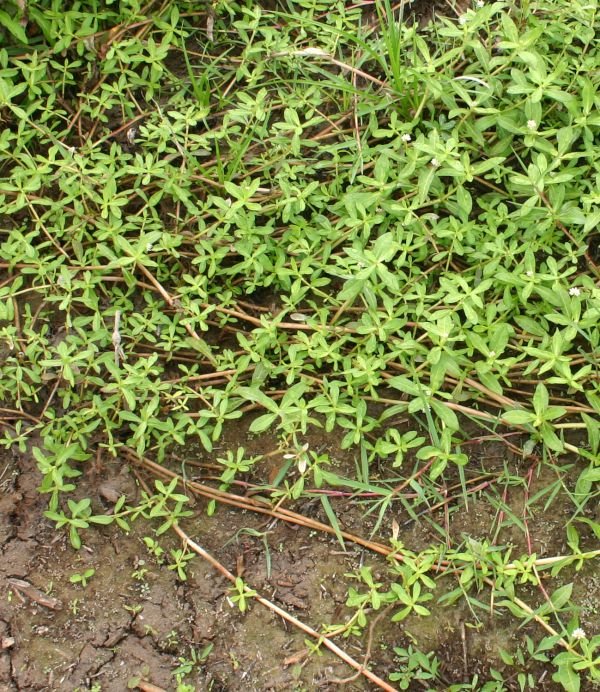
The leaves are , elliptical and waxy, up to 10cm long, though they can be much smaller, especially on land sites. They grow at intervals on the stems in opposite pairs. The stem is hollow and thick, green-brown to reddish, branching, and creeping (or floating) to a length of 10 metres or more. Flowers are white and appear very similar to those of white clover, though smaller.
Flowering occurs Dec to Feb. The preferred habitat is shallow waterways, dams, lagoons, swamps, and estuaries, including fresh to slightly brackish waters. Alligator weed will spread into drains and onto land adjacent to waterways. It also can be an invader of lawns and recreational land sites.
CONTROL – GENERAL
Check with your regional council. All affected local authorities have strict controls for Alligator weed and will provide assistance if you locate the plant. Waikato Regional Council states that you must not control the plant yourself at all, but must report it to them for their control action.
PHYSICAL CONTROL OF ALLIGATOR WEED
On land sites you can dig out small patches, ensuring that every fragment of the material of the stem is transported off the site. And check for regrowth!
BIOLOGICAL CONTROL OF ALLIGATOR WEED
There are a beetle, a moth, and grass carp. These are effective at the right time, but you need to consult your local authority on the options. The grass carp will also require a DoC permit (well, you will require one … not the actual fish).
HERBICIDES TO CONTROL ALLIGATOR WEED
Herbicide to Kill Alligator Weed
Where permitted by your local authority, control via herbicides can be undertaken. However, spraying over waterways will require resource consent, and also an ‘Approved Handler’ certified operator and water-safe herbicide. It’s far more practical to get the local authority involved and let them deal with it. Land sites (or temporarily drained ponds and drains) can be controlled as follows:
- Spray spring-autumn with 5g MSF600 + 5ml SprayWetter per 10L water, using extreme care where close to waterways.
- G-360 GLYPHOSATE, G-540 GLYPHOSATE, granular glyphosate (Granny Herbicide) and GrassMate are also effective sprays, at the label rates given for general use. Use great care around waterways!
- Dicamba 500 Select – use 400-600ml in 200L water per hectare. use great care when spraying around waterways.
- GrassMate XTRA: 6ml/L by knapsack – Apply during active growth from full leaf to early flowering
Herbicide Gels or Weed Wiping to control Alligator Weed
- Cut'n'Paste MetGel applied as a paste on the cut stems is a simple and effective control
- Weed wipe with 5g MSF600 + 1ml SprayWetter per litre of water.
If you find a new Alligator weed site, the first step is to report it to your local authority. They will explain exactly what your responsibilities are, and theirs. And they will either do the control themselves, or will assist you considerably in the task.