
Broom
Cytisus scoparius
Download PDF

DESCRIPTION
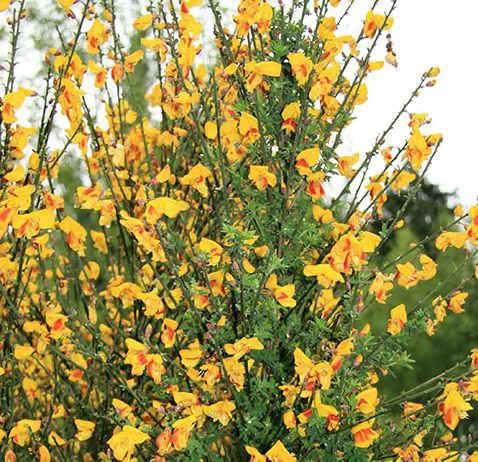
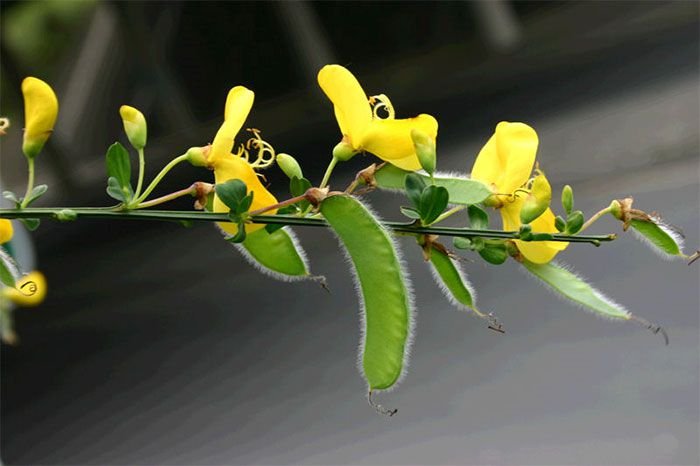
Broom is a woody deciduous shrub with many branches of ridged green stems that have very sparse numbers of very small leaves. Indeed some stems can be entirely leafless.
It grows throughout New Zealand and is most commonly found in and around riverbeds, on low fertility hill country and forest areas, as well as the margins of grazing land. It can form extremely dense thickets, and although it is not as spiny as gorse can still make movement very difficult or impossible for stock. It is tolerant of cold conditions and can be readily found at high altitudes and southerly latitudes.
Broom has very attractive golden-yellow flowers in spring (and sometimes later), which are followed by the emergence of explosive seed pods. The flowering normally follows that of any gorse in the same locations and can be distinguished at distance due to being a lighter yellow than the gorse flowers.
The leaves, in addition to being both sparse and small, are trifoliate in form. They fall from the stems very easily.
There is a similar species, Montpellier broom, which is distinguished by having many more leaves and smaller flowers.
MANUAL/MECHANICAL CONTROL
Small plants can be dug or grubbed out, but this should be done before fully-developed seed pods are present, to prevent accidental release of seeds onto the disturbed ground. Small bushes can also be slashed and the area cultivated, especially if heavy grazing can follow to clean up seedling growth.
Goats can also provide reasonable control of broom by grazing, especially smaller and seedling growth.
HERBICIDES TO CONTROL BROOM
Because of the scarcity of leaves on broom, there is generally less than ideal leaf area to receive and take up sprayed herbicides. This has led to reports of disappointing results with some sprays, including metsulfuron (e.g. MSF600). However, not everyone agrees with this, and many users report perfectly satisfactory results. Most of the reports are from the South Island, which could indicate a regional resistance of broom to that herbicide.
In all cases, spraying is most effective at the time of maximum leaf cover. This usually occurs in spring and early summer.
Stump Swab or Paste to Kill Broom
Broom cut by chainsaws and scrub cutters will usually regrow from dormant buds on the stumps, so treatment of the stumps with herbicide is essential.
- MSF600 at 5g/L water swabbed onto fresh-cut stumps.
- Cut'n'Paste Picloram Gel or MetGel applied to freshly cut stumps in a 2-4mm layer or paste
Herbicide Sprays to Kill Broom
- TRICLO Herbicide at 200-300ml/100L water +100ml SprayWetter organosilicone penetrant, applied by handgun; or Triclo at 10L/ha +2L SprayWetter in 400L water by aerial spray.
- GrassMate at 250ml/100L water +100ml SuperWetter organosilicone penetrant, applied by handgun; or GrassMate at 10L/Ha + 2L SuperWetter in 400L water by aerial spray.
- MSF600 sprayed by handgun at 35g/100L water, + 100ml SuperWetter
- G-360 GLYPHOSATE sprayed by handgun at 1L/100L water + 100ml SuperWetter, G-540 GLYPHOSATE at 670ml + 100ml SuperWetter, or Granny Herbicide at 450g/100L water + 100ml SuperWetter.
- Ralid sprayed by Spot Spray high volume 500ml/100L or 125ml/10L knapsack users.
- GrassMate XTRA sprayed by handgun 250ml/100L water or 10L/Ha by air
