INKWEED
Inkweed – Phytolacca octandra
Download the PDF

DESCRIPTION
Inkweed is a soft-wooded, leafy perennial shrub that grows to about 2 metres tall. It is native to South and Central America.
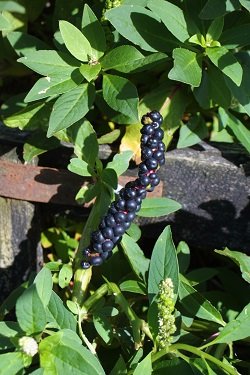
Flowers are green and are followed by dense cylindrical clusters of dark purple-black berries, which when smashed exude a dark staining reddish purple juice (hence the name inkweed). The leaves are initially light green, darkening with maturity, at which time they are 15cm long by 5 cm wide and of a pointed oval shape. Both berries and leaves are unpalatable and mildly poisonous to stock, and are therefore rarely grazed.
Stems are initially reddish and soft but with age become woody, hollow and extensively branched. The bush has a substantial, fleshy taproot.
Inkweed prefers to grow in disturbed and bare ground including open areas, and also in burned bush and waste areas. It is suppressed to some extent by frosts, but not killed. Instead in locations with significant frost inkweed will become an annual, dying back to its base in winter and re-growing from there in the spring.
The plant grows readily from seeds distributed by birds into any accommodating locations.
Inkweed is found from Auckland south in the North Island, and in the top of the South Island to Kaikoura, plus on Banks Peninsula. In suitable bare ground locations it can form large and dense stands.
PASTURE MANAGEMENT
Inkweed will generally not successfully invade good quality pasture with a well-developed sward.
GRUBBING-OUT
Individual plants and isolated clumps can be grubbed out successfully at any time, taking care to minimise soil disturbance on the site.
HERBICIDES TO CONTROL INKWEED
There are several methods of using herbicides to control or kill inkweed. In all cases the optimum time to treat the plant is when it is most actively growing, which is generally from October to April. If spraying frost-damaged plants, it is important to wait until there is adequate foliage regrowth to receive and absorb the spray.
Cut and Swab weedkiller to control Inkweed
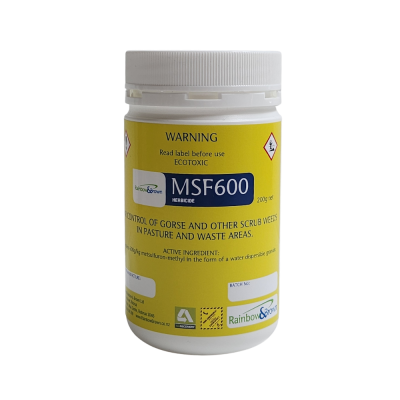
Larger isolated bushes can be slashed close to the ground and the stumps painted with a mix of 2g MSF600 in 1 litre of water.
Cut'n'Paste Gels to Kill Inkweed
Use Cut'n'Paste Original Gel OR Cut'n'Paste Bamboo Buster for Woody and Leafy weeds.
Spot Spraying Herbicides to Kill Inkweed
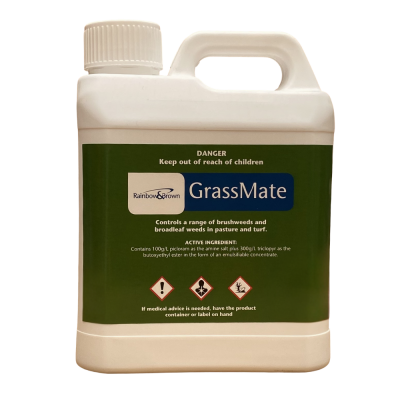
- GrassMate – 6m/L applied anytime to whole plant. Grass friendly, but will suppress clover. Make sure that complete coverage as achieved, especially as mature bushes can be both large and dense.
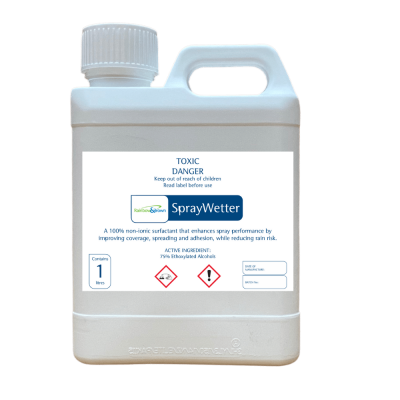
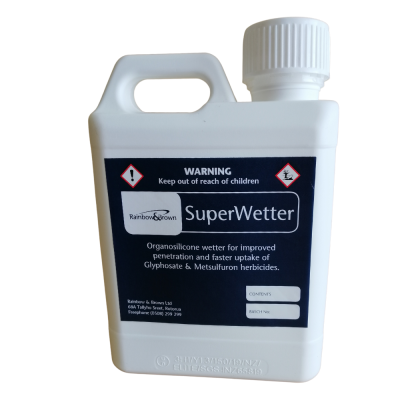
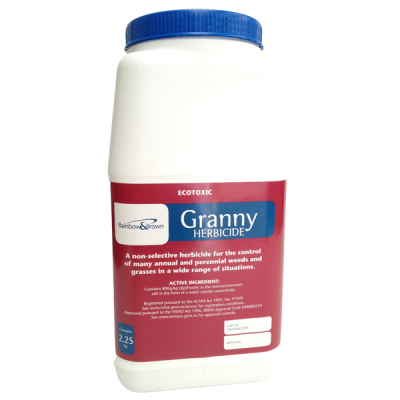
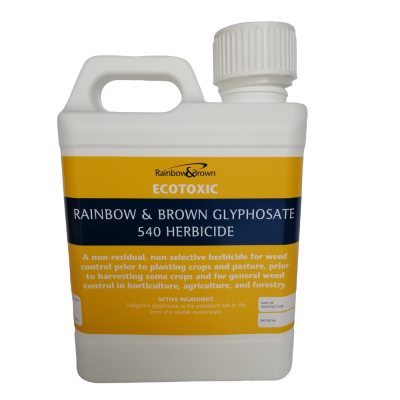
- G-360 – GLYPHOSATE – 1L per 100L water, plus 100ml SprayWetter penetrant. If using G-540 GLYPHOSATE – 670ml per 100L water. This option is not grass friendly.
- MSF600 – 50g per 100L water, plus 100ml SprayWetter penetrant. This option is not pasture grass friendly, but will not normally harm native grasses. It will kill clover.
- Dicamba 500 Select - 15ml plus 40ml Rainbow & Brown MCPA750 in 15L water. Grass friendly but will kill clover.
- Dicamba 500 Select - 20ml plus 90ml WHACK – 2,4D 800 per 15L water. Grass friendly but will kill clover.
- GrassMate XTRA – 6ml/L by knapsack – Apply during active growth from full leaf to early flowering
Spot Treatment weed killer to Kill Inkweed
-
Buckshot – 30g per square metre to the soil beneath the canopy of the bush (i.e. within the drip line). Best applied from late winter to late spring.
Boom Spray Herbicides to Kill Inkweed
-
WHACK – 2,4-D 800 applied at 3L/Ha is effective as a boom spray against inkweed seedlings (no bigger than 4 leaves). However in most circumstances spot spraying of individual bushes and stands (as above) is more satisfactory.
-
Dicamba 500 Select - 100ml plus 260ml Rainbow & Brown MCPA750 in 100L water per hectare. Grass friendly but will kill clover.
-
Dicamba 500 Select - 120-140ml plus 535ml WHACK – 2,4-D 800 per 100L water per hectare. Grass friendly but will kill clover.